
World History Atlas
solvappsBooks & Reference
4.267.00 Reviews
- Version
- 3.48
- Installs
- 10.00K
- Age Rating
- Everyone
Screenshots
Our Review of World History Atlas
 Analysis by Appyee
I often reach for a history reference when a name or border in a book leaves me with more questions than answers. World History Atlas is aimed at that moment: it puts historical geography at the center, so I can start with where something happened and then follow the events and context around it. That makes it a different sort of reading experience from a conventional history book, and a useful one when dates and places are hard to keep straight.
Starting with a place, not a chapter
The app is a Books & Reference title from solvapps, and its focus is easy to understand: use a historical atlas to explore the past through maps. I find that approach especially helpful when I am reading about changing states or empires. A written account can explain a campaign or political shift, but seeing geography alongside the story gives me a better sense of distance, borders, and what changed.
It is not necessarily the right starting point for every question. If I want a long narrative about one person, a biography or a carefully written history book will do more. If I want to check a place against a date and see the broader setting, though, an atlas can get me oriented quickly. That distinction helps set expectations: this is a reference for exploring historical context, not a replacement for every kind of history resource.
A practical reading workflow
My most useful way to approach a map-based history reference is to begin with a specific question rather than browse without direction. For example, if I come across an unfamiliar kingdom in a chapter, I can use the atlas to locate it, look at its setting, and connect that location to the wider period I am reading about. I then return to the book with a clearer mental picture, rather than trying to memorize isolated names.
That same habit works for study sessions. I would first note the people, places, or turning points I need to understand, then use the atlas as a visual companion while reviewing them. A quick revisit after reading can be more useful than opening the app and scrolling at random: the map gives the facts somewhere to sit in my memory. For a teacher, it can also help frame a discussion around how geography shaped a historical situation, instead of treating borders as static lines.
On an ordinary evening, I might be reading about a conflict and pause because two locations sound close together but are not easy to picture from the text alone. Checking a historical map can make the next few pages easier to follow. I would still keep the book open for its argument and detail; the atlas is most valuable as a companion that answers “where does this fit?” and makes the surrounding history less abstract.
A Journey Through Time
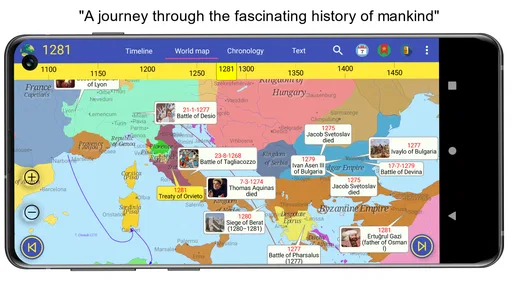
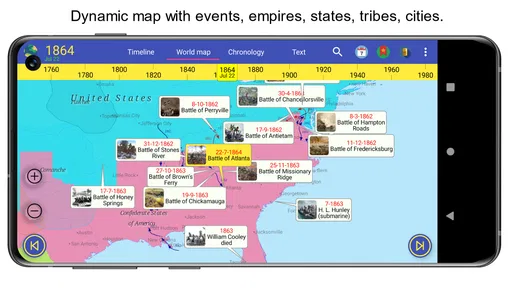
First off, the layout is super intuitive. When you open the app, you're greeted with a beautifully designed map of the world. But this isn't just any map – it's a portal to different eras. You can select any time period, and the map will transform to show the political boundaries, major cities, and events of that era. It’s like having a time machine without the headache of flux capacitors!
The World History Atlas app covers a wide range of periods, from ancient civilizations to the modern age. This makes it a fantastic tool for students and educators alike. The ability to visually see how borders and empires shifted over time really brings history to life. It’s one thing to read about the Roman Empire’s expansive reach, but it’s another to see it sprawled out on a map, covering vast swathes of Europe and North Africa.
Diving Deeper
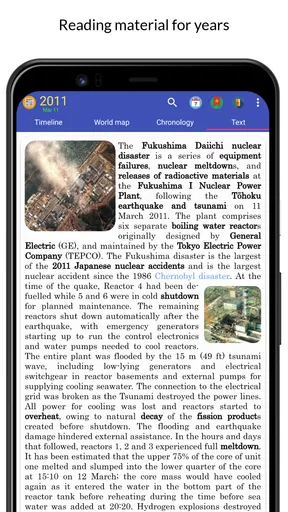
But wait, there’s more! Tapping on any region or country opens up a treasure trove of information about that area during the selected time. We're talking about detailed descriptions of political scenarios, cultural advancements, and significant events. This feature is perfect for those moments when you want to go beyond the surface and really understand the context of a historical event.
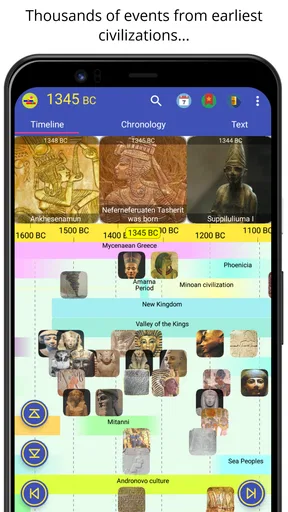
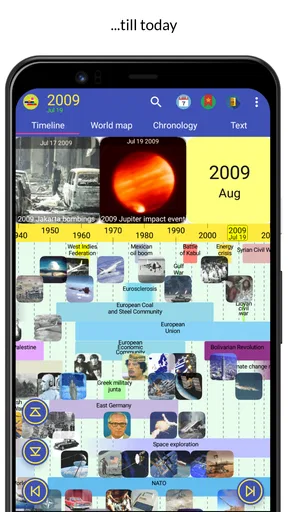
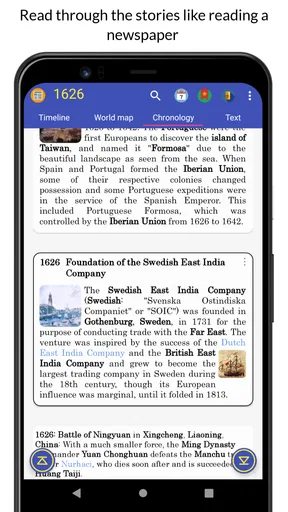
One of the things I loved is how the app integrates timelines. You can follow a timeline for a specific country or event, which shows you how things evolved over time. It’s a fantastic way to connect the dots and see how different historical events are intertwined. Plus, the timelines are peppered with images and illustrations, making the learning experience both engaging and visually appealing.
Making maps useful beyond browsing
A small but worthwhile study trick is to compare a map with a question in mind: what changed, what stayed put, and which neighboring places mattered? That turns visual browsing into active recall. Instead of only admiring a boundary, I try to explain why it matters in my own words, then check the accompanying context. This is more useful for revision than repeatedly looking at the same map without a task.
There is also a trade-off in learning through maps. They are excellent for showing spatial relationships, but a map cannot carry every cause, disagreement, or human experience behind a political change. I would use the atlas to establish the setting and then turn to a fuller account when I need competing interpretations or a sustained explanation. That division of labor keeps the visual overview helpful without asking it to do a book’s job.
Interactive Learning
For those who learn best through interaction, the app has you covered. There are quizzes and challenges that test your knowledge of world history. These aren’t your run-of-the-mill quizzes either. They’re thoughtfully crafted to reinforce learning and ensure you really get the hang of historical timelines and events. It’s a great way to test yourself or even compete with friends for bragging rights.
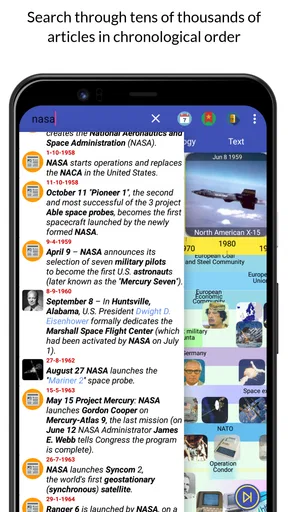
If you're worried about getting lost in the details, fear not. The app includes a handy glossary and search function. If you come across a term or name you’re unfamiliar with, a quick search will provide you with all the context you need. It's like having a history teacher on speed dial!
Where it fits among history resources
Compared with a general encyclopedia, a historical atlas puts location and shifting borders first; compared with a textbook, it is easier to dip into when one particular place or period has caught my attention. Those alternatives are better when I need a carefully structured course, extensive citations, or a long narrative. I would pair them rather than choose one blindly: read for explanation, use the atlas to orient myself, and use a glossary or search when a term blocks the flow.
For a student, the practical question is whether the app supports the way they revise. If a visual overview helps make periods memorable, its map-and-context approach can be a good fit. If the assignment depends on quoting a source, tracing historiography, or building an argument from detailed documents, I would use a library resource or textbook as the main tool and treat the atlas as a supplement. It can help me understand a subject without standing in for evidence I need to cite.
Its audience rating is Everyone, and the app has a 4.2 average from around a thousand ratings. That suggests it has found an audience among people seeking a general history reference, but the score alone cannot tell me whether its particular style suits my needs. I would judge it by whether I want to explore history spatially and whether that makes me more likely to return to the material.
The User Experience
Now, let's talk about the user interface. The developers have clearly put a lot of thought into making the app both functional and aesthetically pleasing. The design is clean and modern, with easy navigation that won’t leave you scratching your head. Plus, the app runs smoothly without any hiccups, which is always a plus in my book.
And for those of you who prefer to learn in other languages, the app offers multilingual support. This makes history accessible to a broader audience, which is always a win in my eyes.
Expectations, cost, and staying power
The main friction for me is knowing what kind of depth I need before I rely on an atlas. It can quickly clarify the setting, but a map-focused reference is not automatically the best place to settle every historical debate. I would also avoid treating a visual snapshot as a complete account of a region: borders and labels help organize information, while the history behind them can be messier than a map suggests.
It costs $5.49, so I would think of it as a paid reference rather than a free casual download. Its current version is 3.48, and it supports Android 4.4 and later, which makes it relevant to people using older compatible devices as well as newer ones. The app has passed 10,000 installs, but I would make the decision based on how often I expect to consult historical maps, not on popularity alone.
One useful way to decide is to ask whether I will use it repeatedly: for school review, personal reading, lesson preparation, or satisfying questions that arise while watching a history program. If I only need a single fact, a quick web search may be enough. If I regularly lose track of where events unfolded, keeping a dedicated atlas nearby can save me from piecing together a mental map from scattered pages.
So, whether you're cramming for a history exam, planning a lesson, or just satisfying your curiosity, the World History Atlas app is a fantastic resource. It's comprehensive, user-friendly, and, most importantly, it makes learning history fun and interactive. Download it today and start your journey through time!
My recommendation is strongest for curious readers who want geography to make history easier to follow, and for learners who benefit from seeing change rather than memorizing names in isolation. I would skip it as a primary resource if I needed deep scholarly argument, source-based research, or a guided course from beginning to end. For its particular role as a visual companion, though, I find the approach appealing: it gives me a place to begin, helps me connect a location to its period, and leaves me better prepared to keep reading.
Verdict
Strengths of World History Atlas
- Comprehensive historical timelines.
- Interactive maps for better engagement.
- Offline access for easy use anywhere.
- Regular updates with new content.
- User-friendly interface for navigation.
Limitations of World History Atlas
- Requires significant storage space.
- Some features need internet connection.
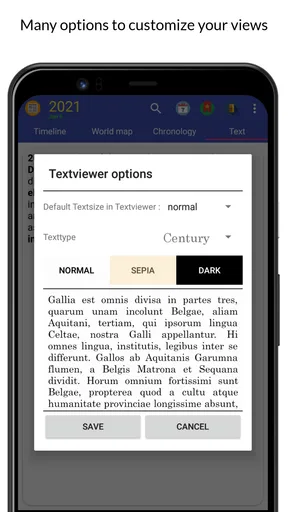
- Limited customization options.
- Occasional slow loading times.
- Ads in the free version can be intrusive.
Similar Picks in This Category
View All
Google Play Books & Audiobooks
Google LLC4.7

네이버 - NAVER
NAVER Corp.3.5

Wattpad - Read & Write Stories
Wattpad.com3.7

King James Bible - Verse+Audio
Ozion4.8

Bible Offline-KJV Holy Bible
Bíblia Offline4.9

Amazon Kindle: Reading App
Amazon Mobile LLC4.8
Frequently Asked Questions
What features does the World History Atlas app offer?
The World History Atlas app provides interactive maps, detailed timelines, and comprehensive information about various historical periods and events. Users can explore different regions, zoom into specific timeframes, and access multimedia content such as images and videos to enhance their understanding of world history.
Is the World History Atlas app suitable for educational purposes?
Yes, the app is designed with educational use in mind, making it ideal for students, teachers, and history enthusiasts. It offers detailed explanations, historical context, and quizzes to test knowledge, making it a valuable resource for both classroom learning and personal study.
Can the World History Atlas app be used offline?
The app offers offline functionality, allowing users to download certain resources and maps for use without an internet connection. This feature is particularly useful for users who want to study on the go or in areas with limited connectivity.
How user-friendly is the World History Atlas app for beginners?
The app is designed to be intuitive and user-friendly, featuring a clean interface with easy navigation. New users can quickly learn to access different features and customize their learning experience. Tutorials and help sections are available to assist beginners in exploring the app's full capabilities.
Are there any in-app purchases or subscriptions required?
While the World History Atlas app is free to download, it offers in-app purchases for additional content and features. These may include premium maps, detailed articles, and ad-free experiences. Users can choose subscriptions for continuous updates and access to exclusive content.
